Twelve figurines of compost creatures for school workshops
A community of municipalities in Côte-d'Or runs workshops on sorting waste and composting, from nursery to the last year of primary school. It wanted figurines of compost creatures; shops only offered a handful. We modelled and printed all twelve species, with their carrying case.
- Client
- Community of municipalities in Côte-d'Or
- Sector
- Local authority
- Location
- Côte-d'Or, France
- Deadline
- 13 November 2026
- Production
- FDM, matte PLA and PLA Silk+, colour in the material, three two-tone parts
The brief
A collection no shop offered
The authority's waste prevention officer wanted to show children the animals that make compost. Shop figurines cover the worm, the snail or the ant, but nobody sells a springtail, a soil mite or a flat-backed millipede. She sent us twelve species, a size range for each and reference photos: fairly realistic figurines, enlarged for the smallest species, and sturdy enough to be handled at every workshop.
The constraints
What made the project tricky
- 01
Species nobody models
No model existed for four of the twelve species, and three had no reference photo. Everything had to start from the client's photos.
- 02
Children from age 3
One-piece parts, nothing that can come off, and legs that stand up to repeated handling. These are teaching aids used under the supervision of a workshop leader, not toys.
- 03
A hand-painted reference
The examples shown were moulded, hand-painted figurines with colour gradients. 3D printing gives flat colour areas and fine layer lines: that had to be said before signing.
- 04
Public purchasing rules
No purchase order and no deposit: the signed quote is binding, and the invoice is paid on receipt, under the authority's payment rules.
The collection
Twelve species, from 4 to 12 cm
3D renders of the final print files. The printed parts also show fine layer lines; on-screen colours are approximate.
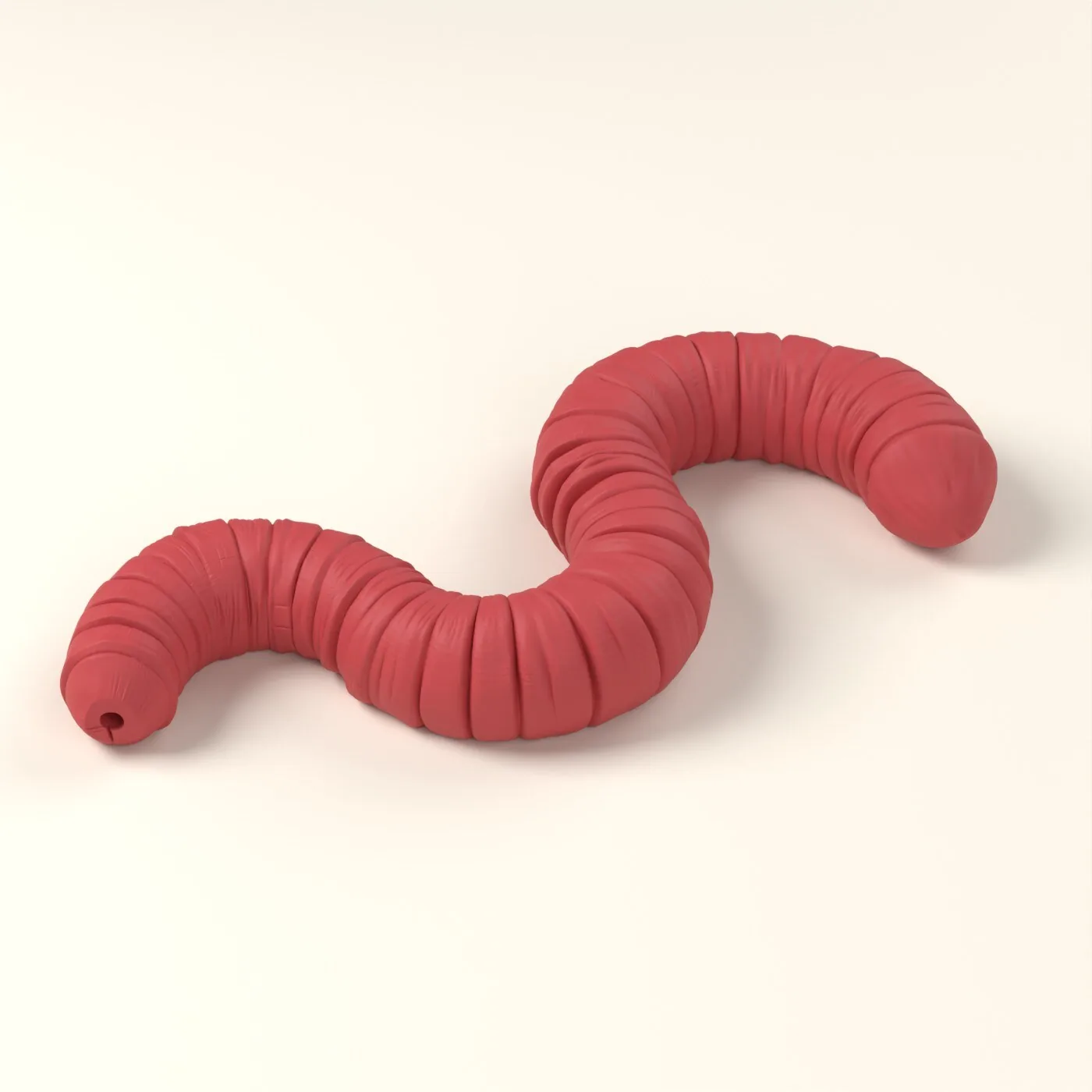
Compost wormEisenia fetida · 12 cm · brick red 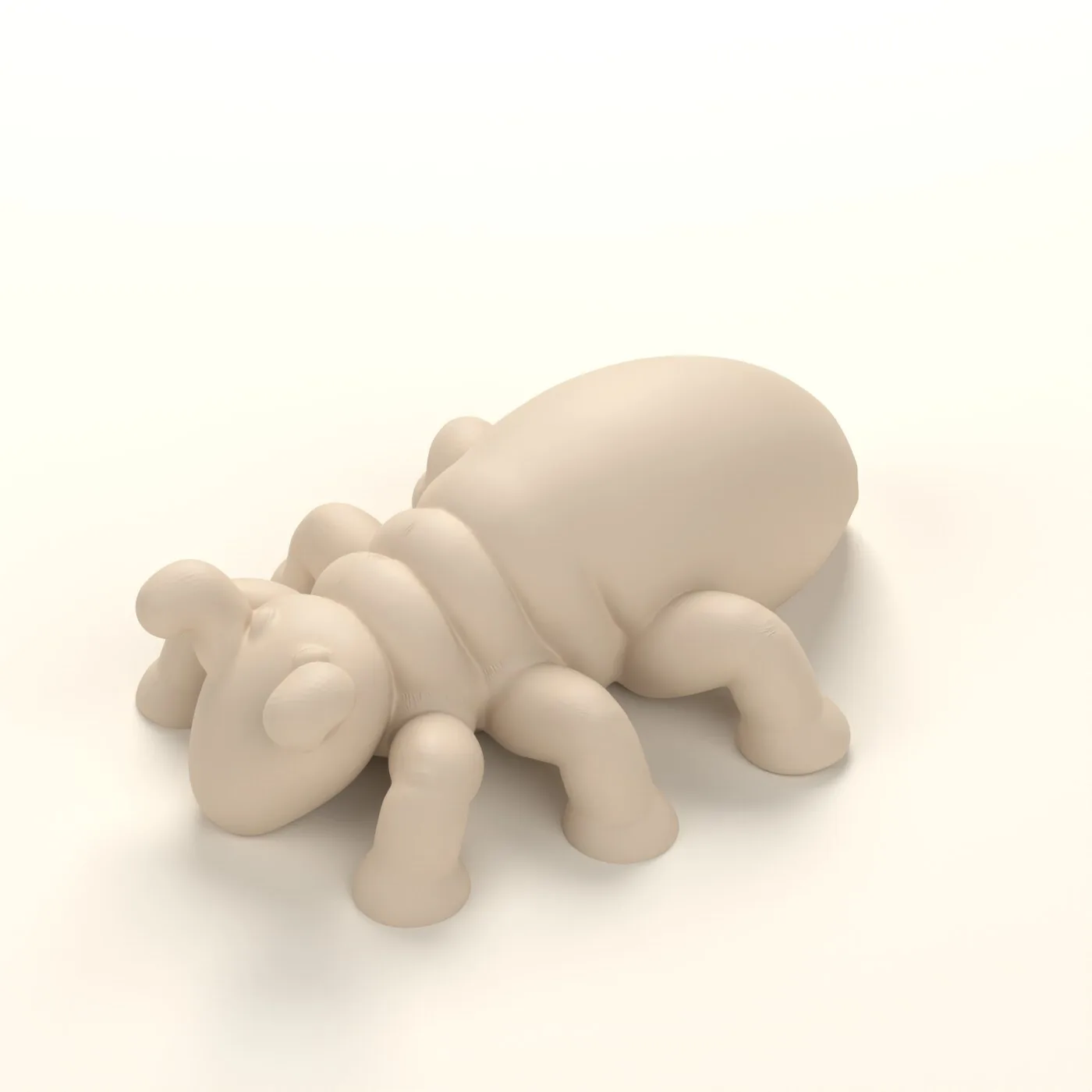
SpringtailCollembola · enlarged twelve times · ivory 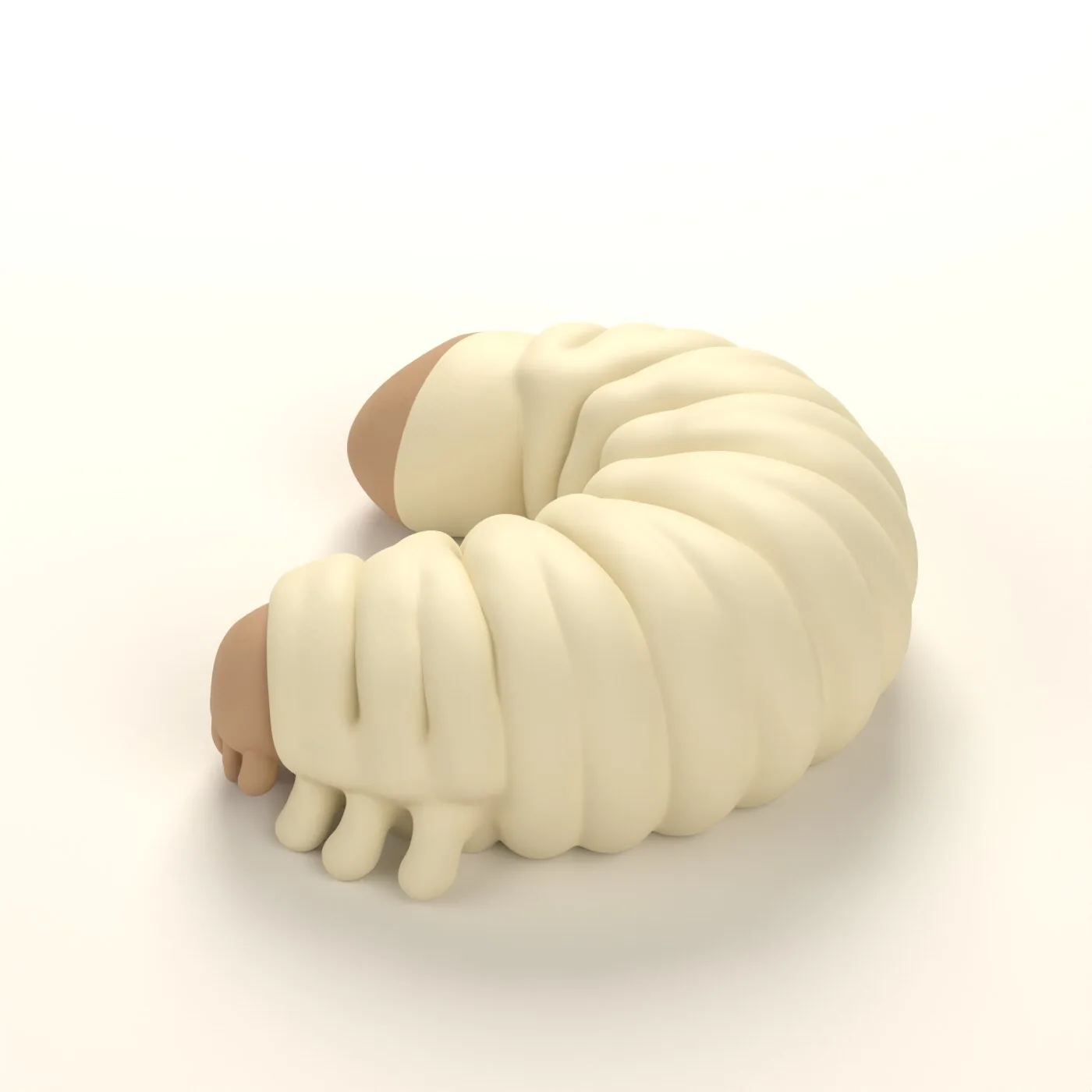
Rose chafer larvaCetonia aurata · 9 cm · two-tone beige and brown 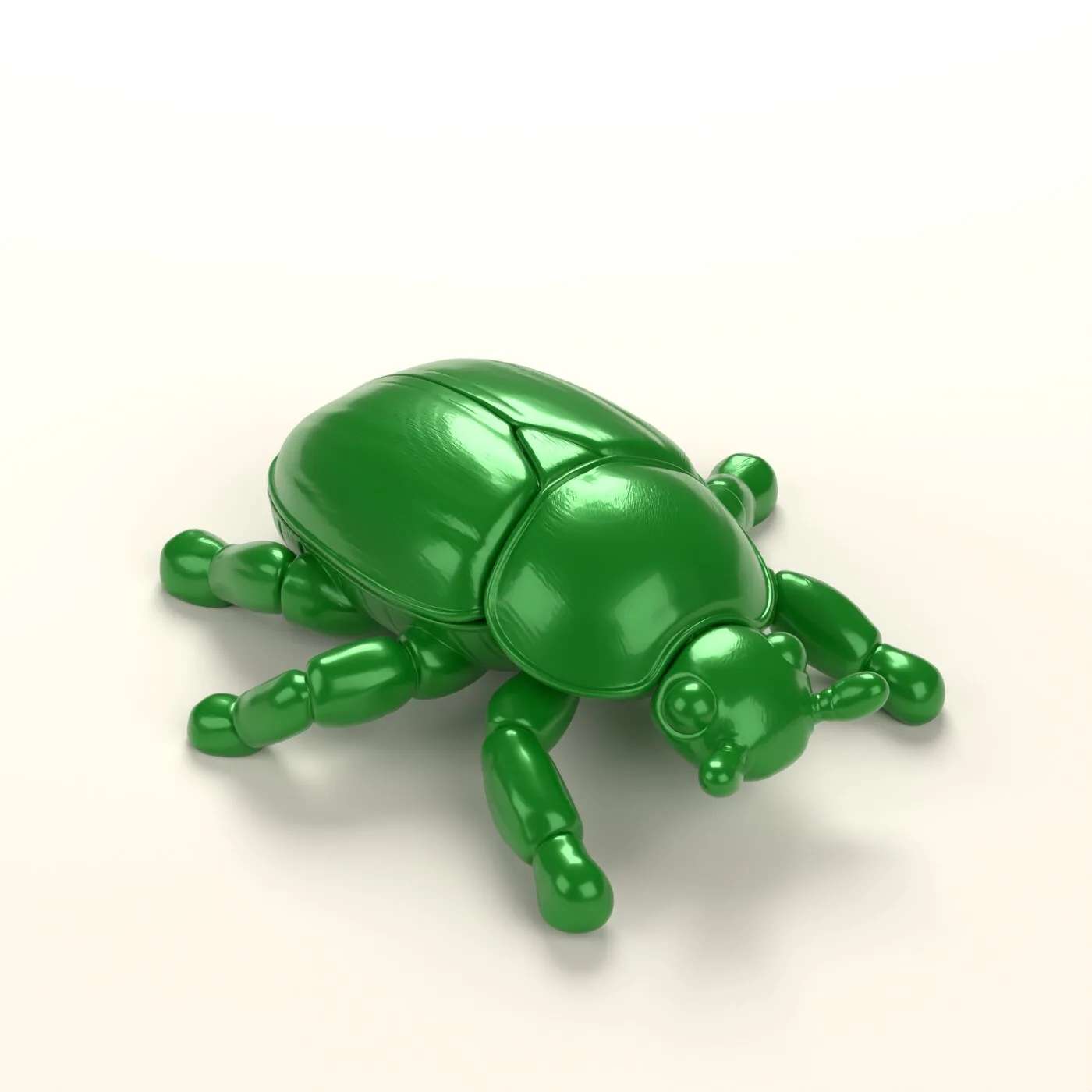
Rose chaferCetonia aurata · 7 cm · glossy green 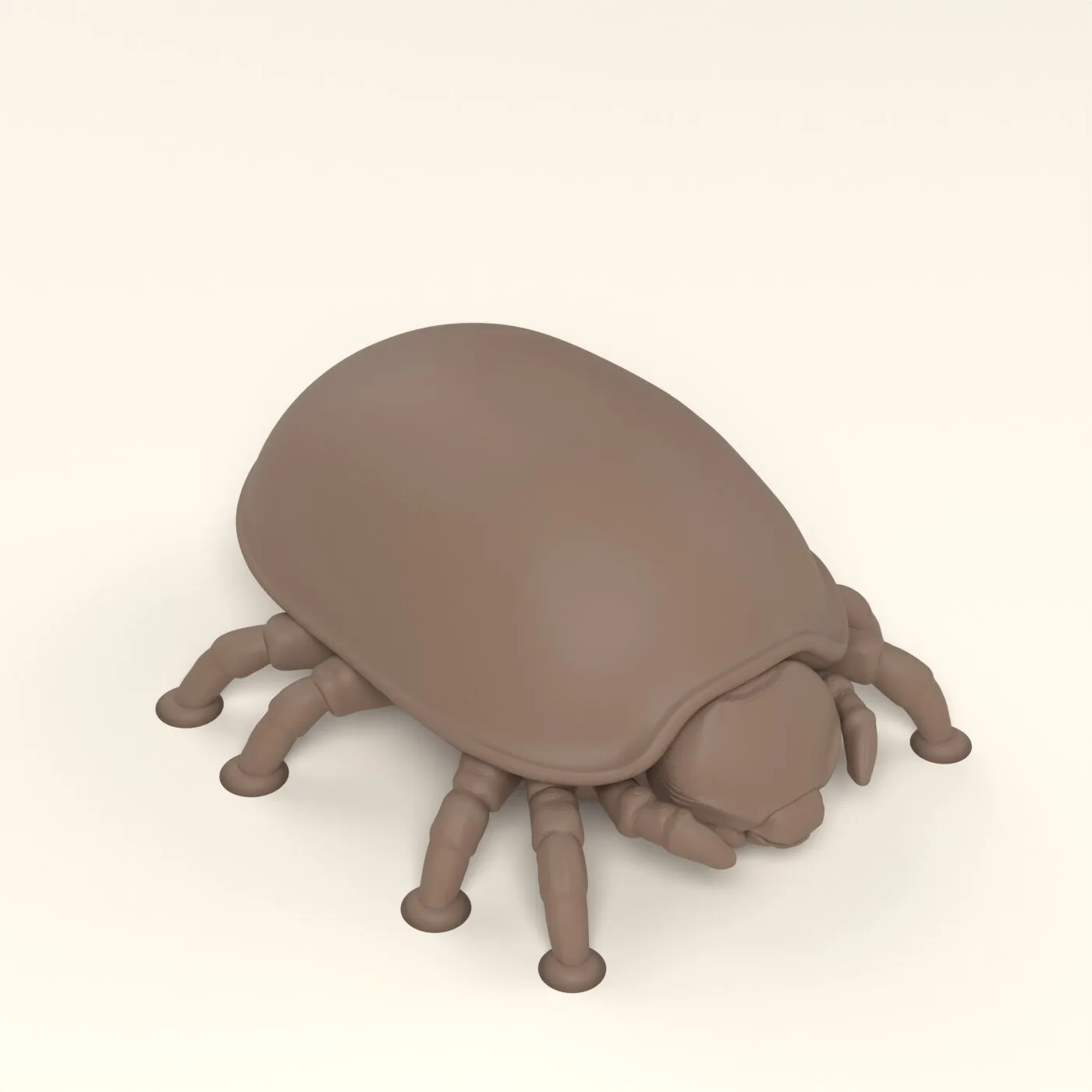
Soil miteOribatida · enlarged forty times, 4 cm · chocolate brown 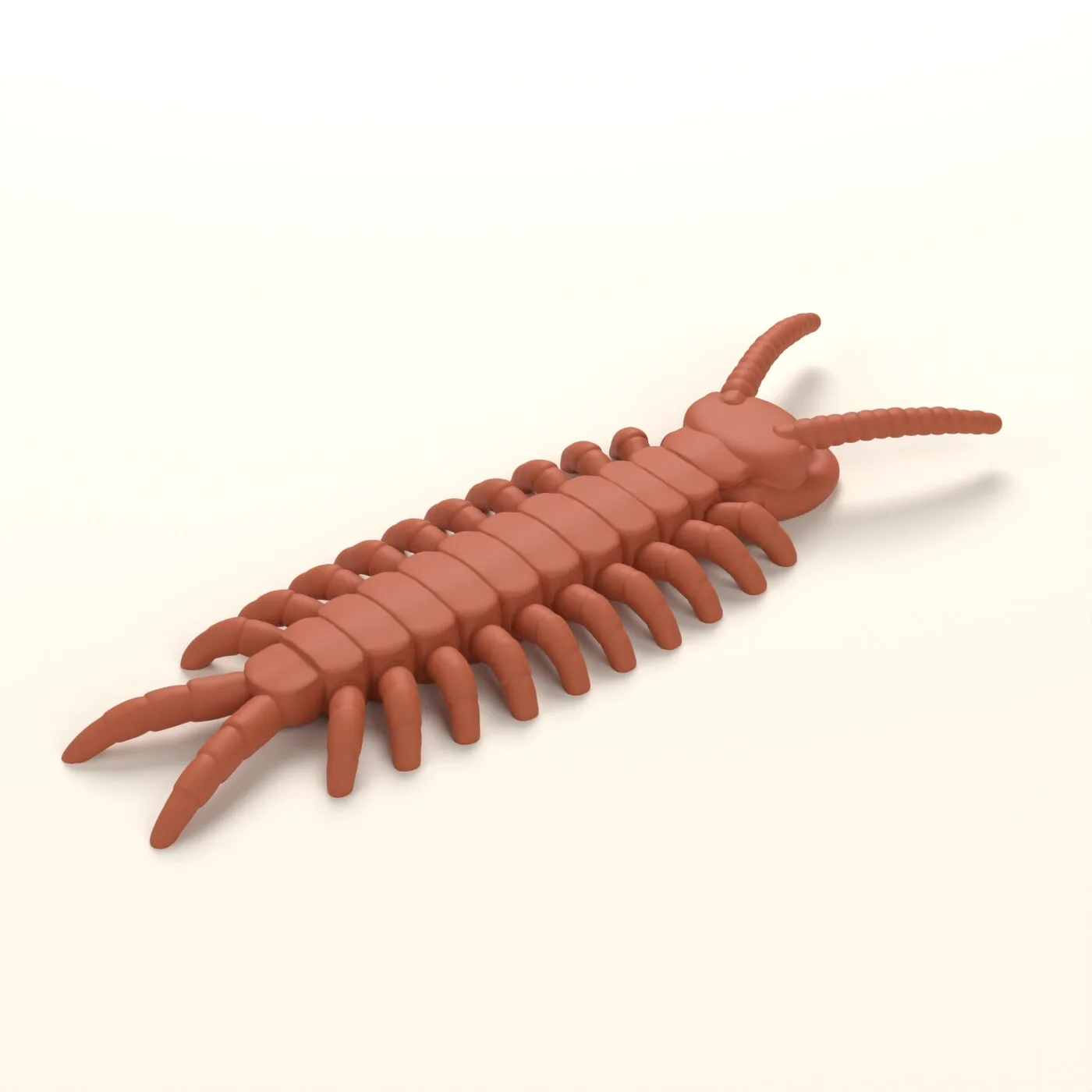
Brown centipedeLithobius forficatus · 9 cm · terracotta 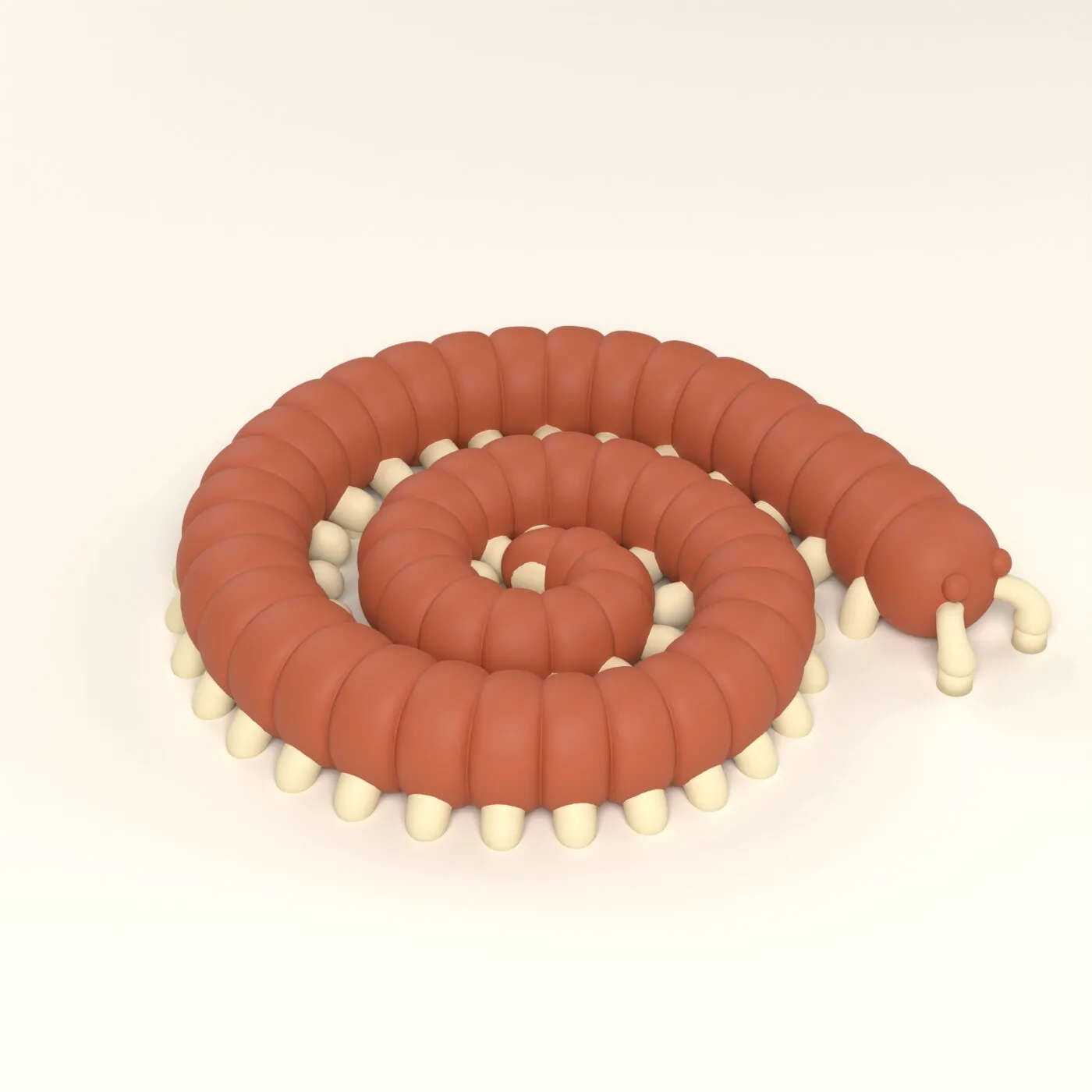
MillipedeJulida · shown curled up · two-tone terracotta and brown 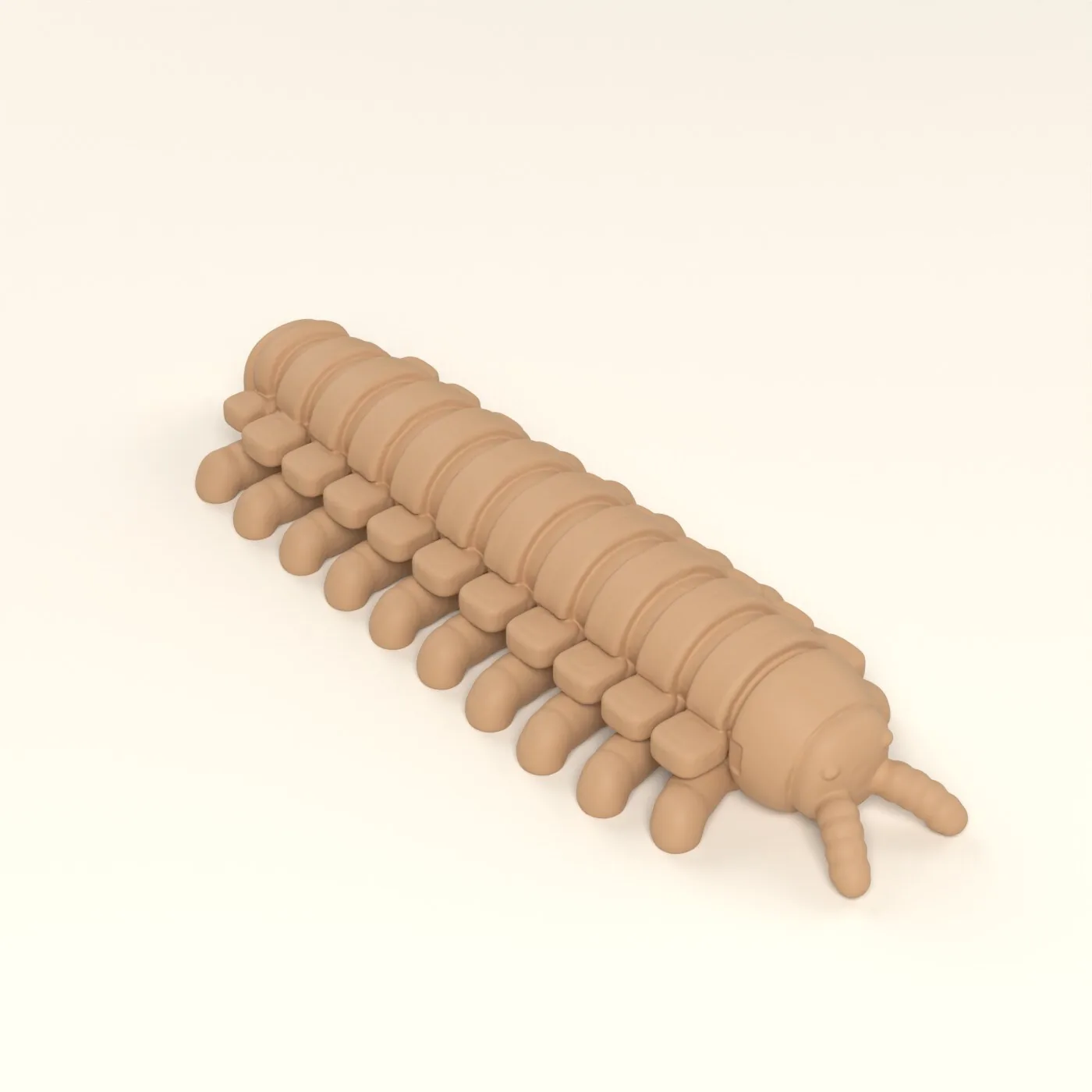
Flat-backed millipedePolydesmus · 10 cm · sand 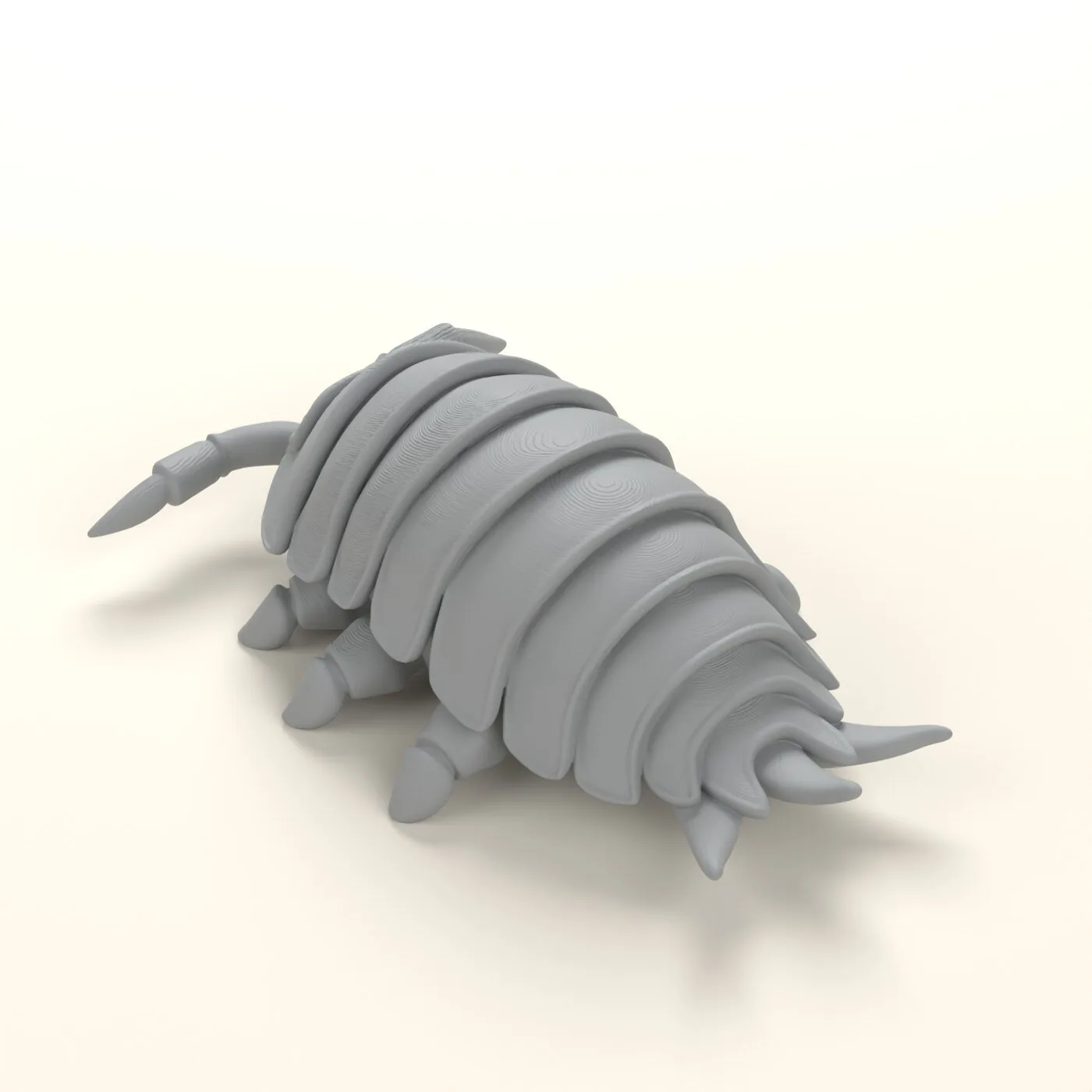
WoodlouseOniscus asellus · 7 cm · grey 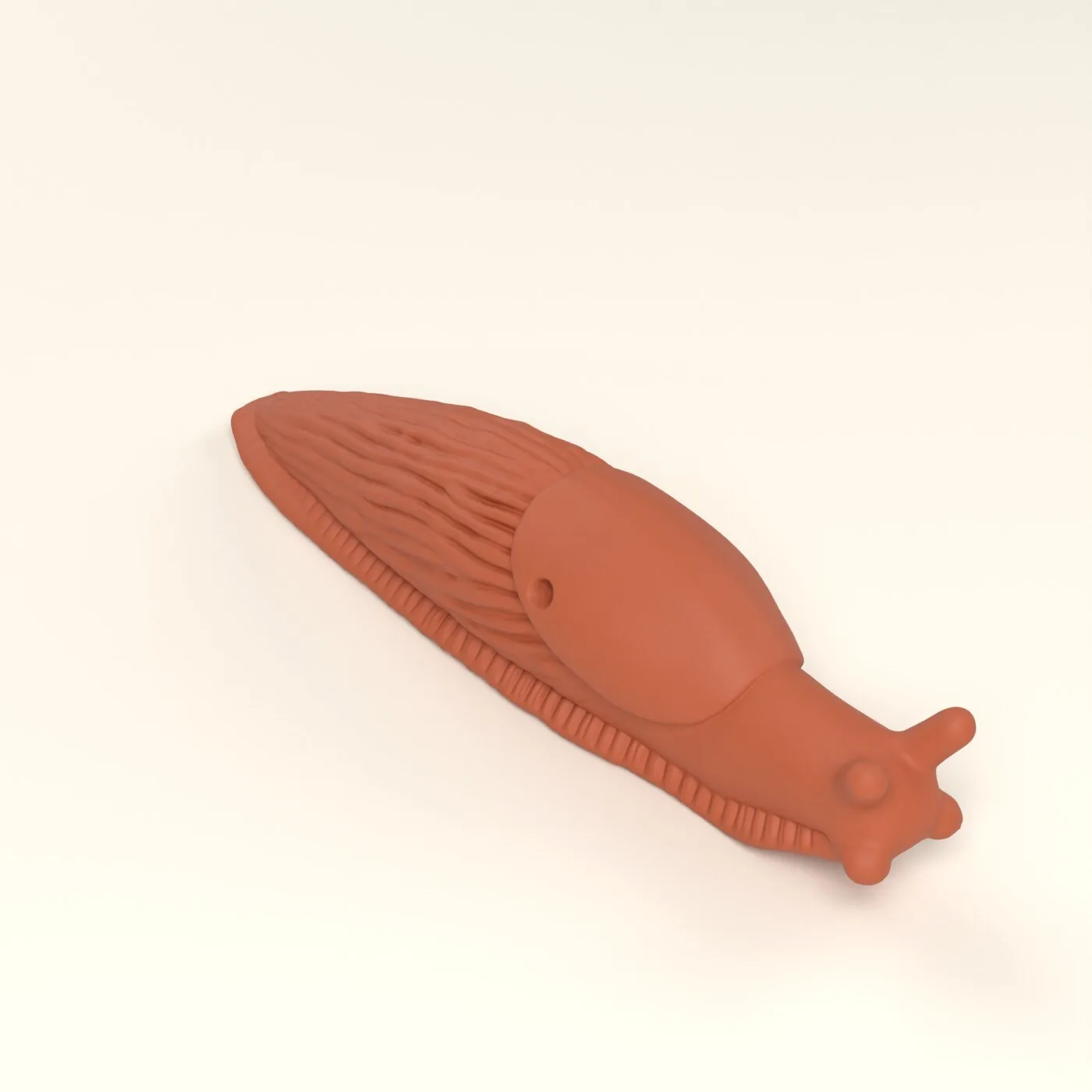
SlugArion rufus · 11 cm · rust orange 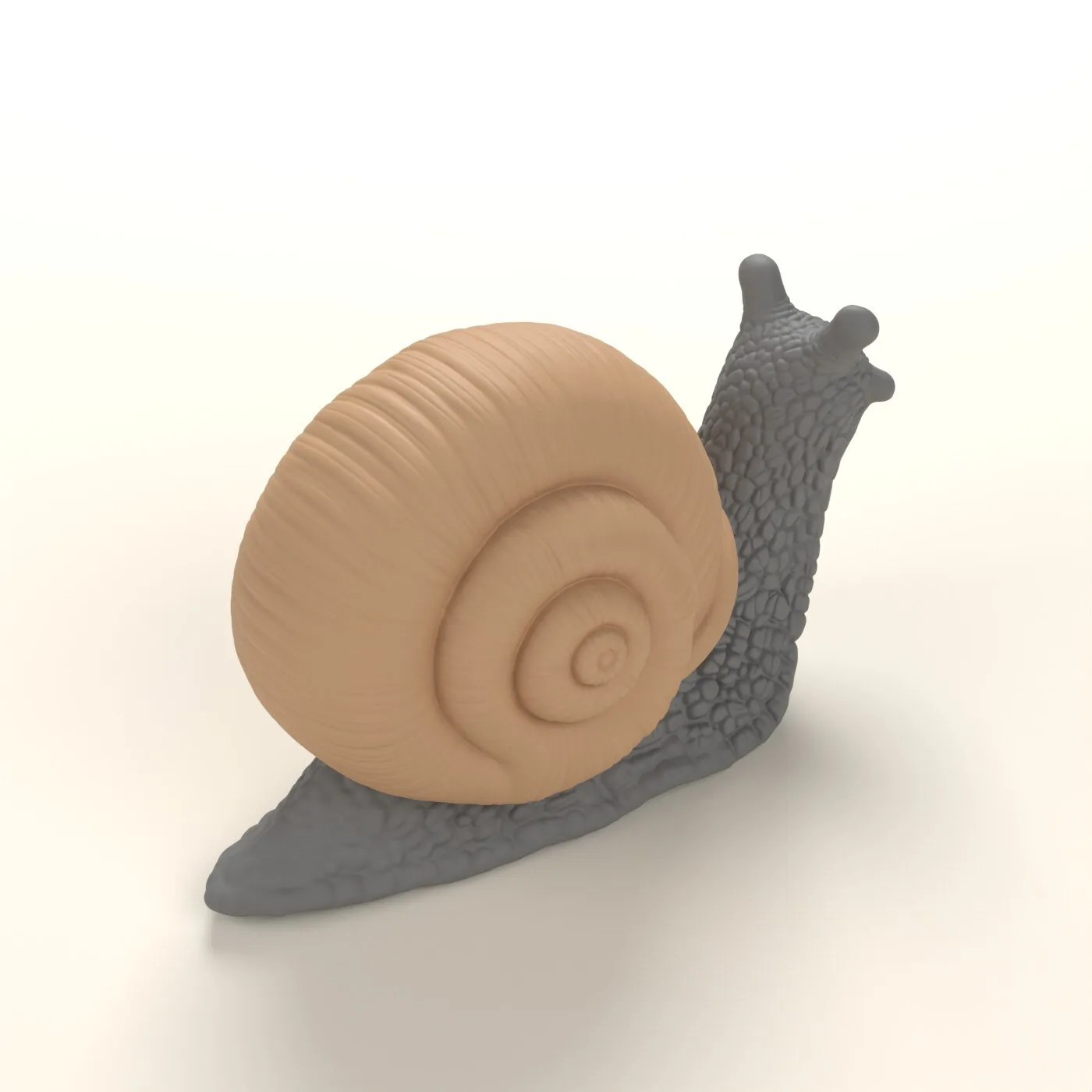
Garden snailCornu aspersum · 8 cm · two-tone brown and grey 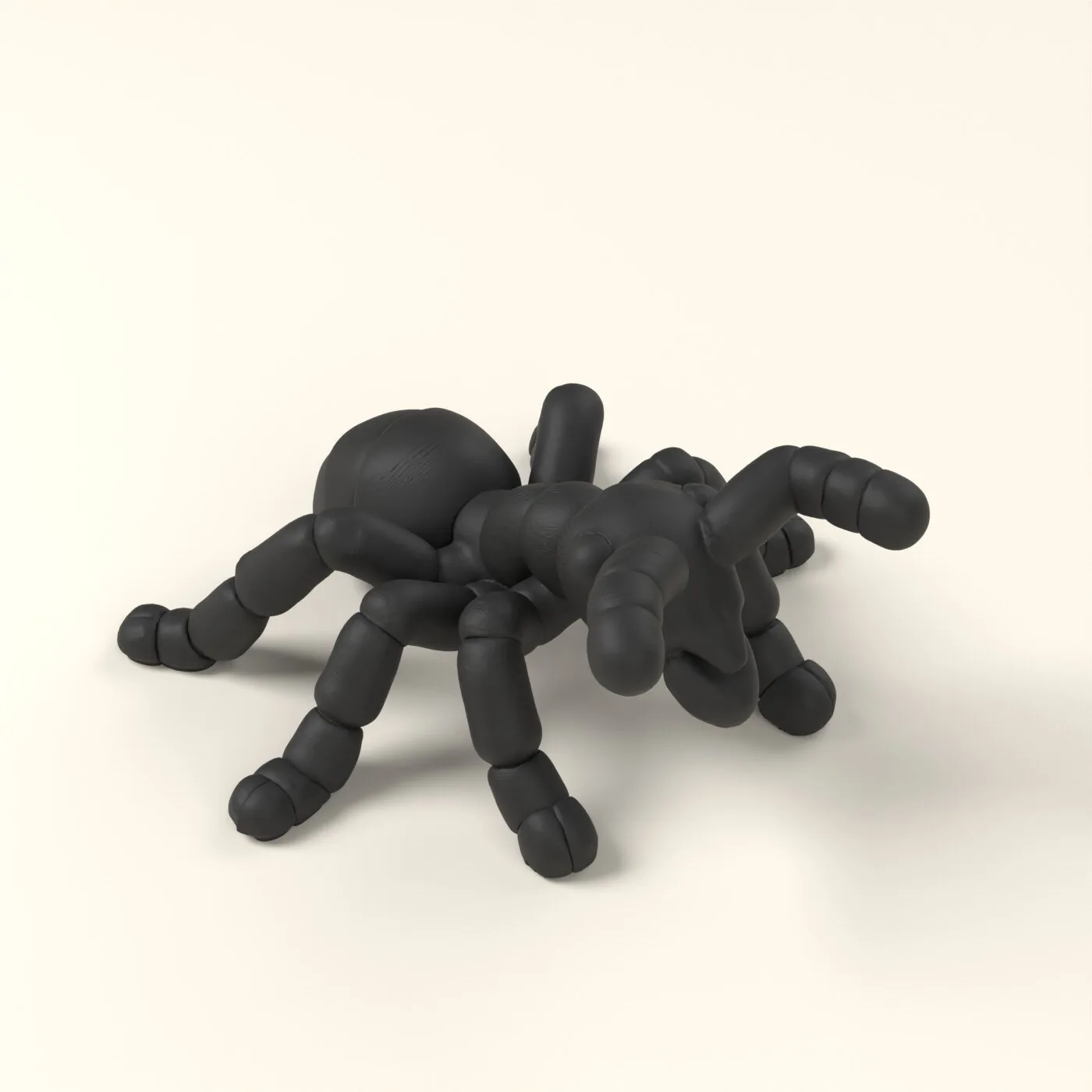
Black garden antLasius niger · 5 cm · black
Our technical choices
How we solved it
- 01
Two quotes, compared honestly
Custom modelling of each species, or adapting existing models. The four species nobody models would have switched to custom work anyway: the real gap between the two was small. We recommended custom work, which guaranteed all twelve species true to her photos.
- 02
Approve on visuals before printing
On the day of signature, a presentation file for the collection: each species with its scientific name, size and colour. The client asked for four corrections (antennae of the centipede and woodlouse, millipede redone as one continuous spiral, slug), made the same day.
- 03
A "sturdiness" edition
Nothing thinner than 3 mm, no more points, shorter appendages and softer reliefs. Rather than change things quietly, we submitted a before/after of each part, approved before any printing.
- 04
Colour in the material
One filament colour per species, no paint or varnish, checked by eye against the approved visuals. The rose chafer is in glossy green PLA Silk+, closer to the insect. Three figurines are two-tone: the AMS changes spool mid-print, and we redrew the colour areas to cut those changes (from 108 to 76 on the millipede).
- 05
Settings tuned part by part
One file per figurine: 0.08 mm layers on fine parts, 0.12 mm elsewhere. The tuned profile brings the whole set from 42 h 30 to 26 h 50 of printing and from 418 g to 272 g of filament. Flared feet under the mite's legs, antennae extended down to the plate, ant joints thickened by 75%.
Behind the scenes
What you do not see on the finished part
3D renders of the final print files. The printed parts also show fine layer lines; on-screen colours are approximate.
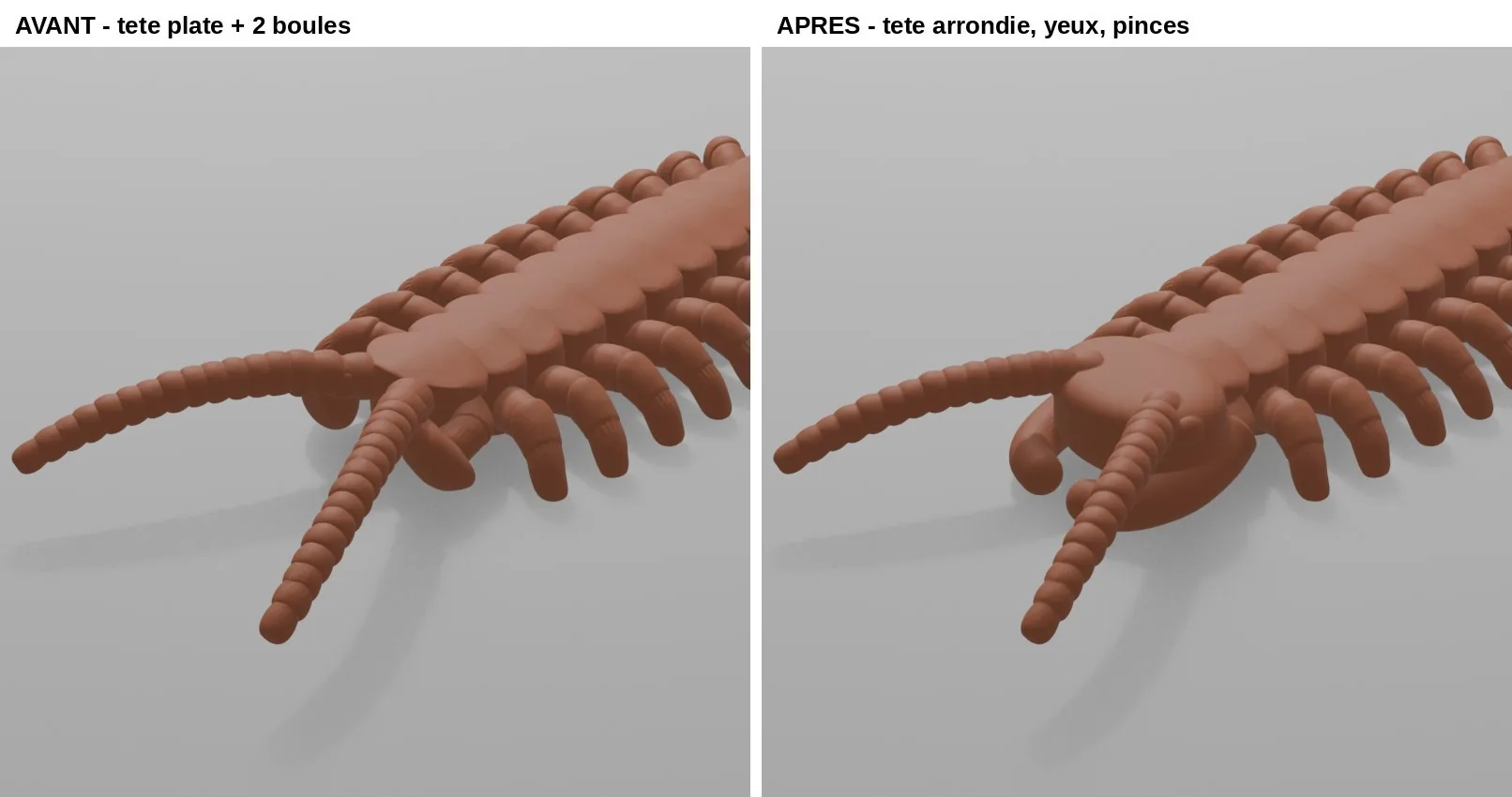
Centipede: the head reworkedFlat head replaced by a rounded head with its forcipules, at the client's request. 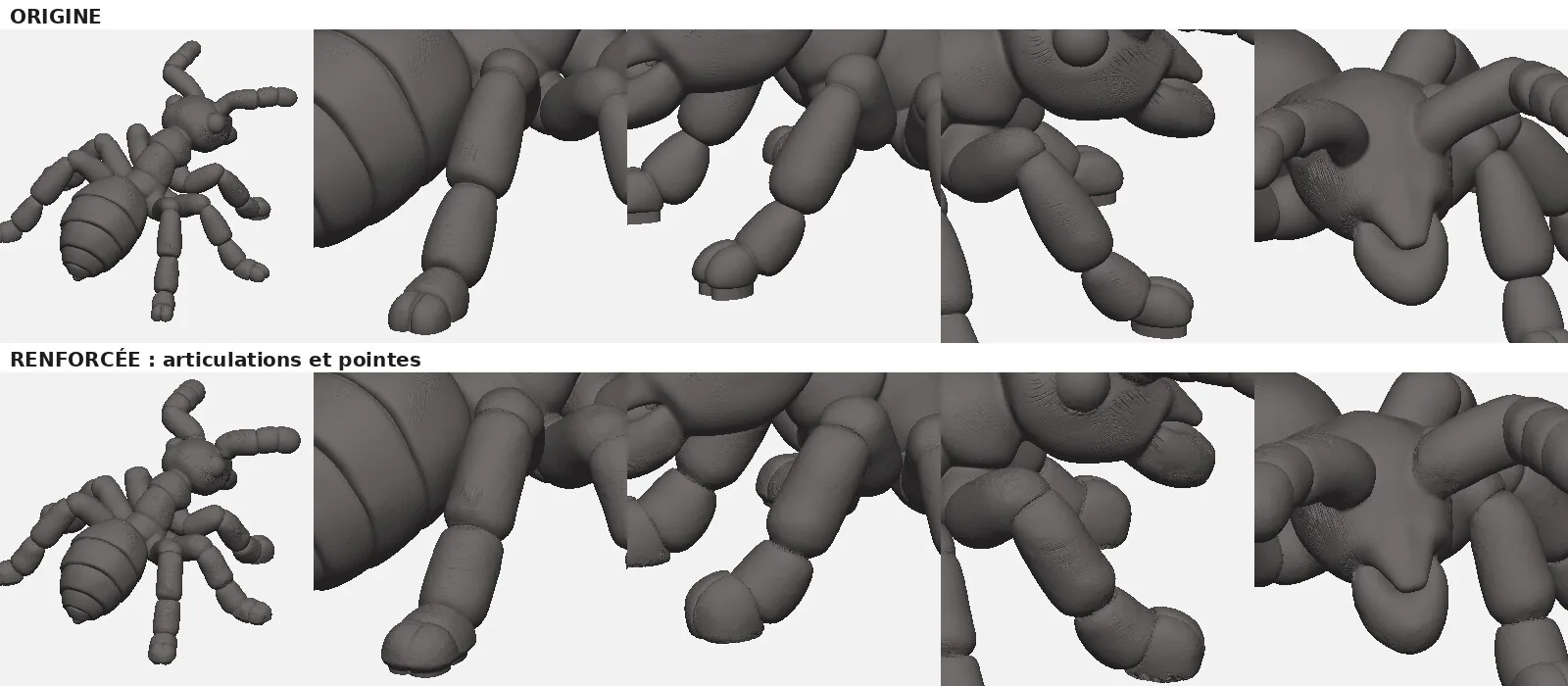
Ant: stronger jointsCross-section thickened by 75% at the thinnest point, so legs do not break between workshops. 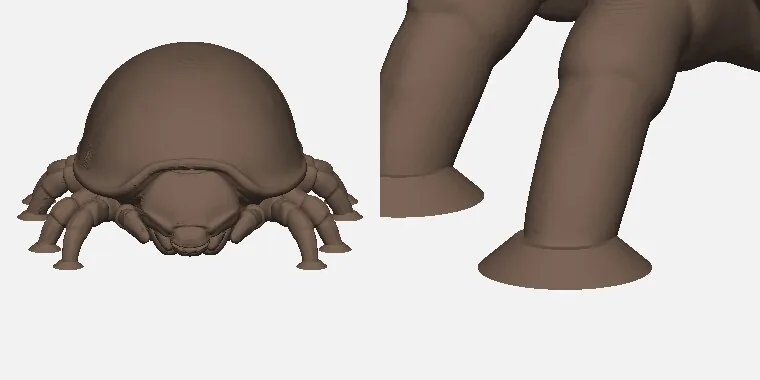
Mite: flared feetA small foot under each of the eight legs, so they stay on the plate during printing.
Key figures
- figurines, one per species
- 12
- figurines, one per species
- minimum thickness for legs and antennae
- 3 mm
- minimum thickness for legs and antennae
- printing time after tuning the settings
- −37%
- printing time after tuning the settings
- from signature to receipt
- 22 days
- from signature to receipt
The schedule
Shipped three weeks ahead of the deadline
The quote announced six weeks, that is 13 November. The collection left on 20 October with its carrying case and care instructions: warm soapy water, no dishwasher or solvent, away from heat. The figurines are designed to be handled by children from age 3, under the supervision of a workshop leader.
- Done
Request received through the website form
- Done
Two quotes: custom modelling or existing models
- Done
Quote signed, collection presentation file sent
- Done
Models approved after the "sturdiness" edition
- Done
Printing starts
- Done
Collection and carrying case shipped
- Done
Received by the authority
Services involved
What we did for this client
Other projects
Your project has a date too
Send us your file, a sketch or a photo, along with the date you need to hit. We reply within 24 business hours with a detailed proposal and a schedule.